Uneven or sloping floors are a clear indicator that the load-bearing framework beneath a home has settled out of alignment. Foundation leveling contractors specialize in lifting and stabilizing compromised structures to restore flat, safe interior surfaces throughout the house.
Addressing floor elevation issues promptly prevents secondary structural damage to drywall, door frames, and plumbing networks. Understanding the precise techniques professionals use helps property owners make informed choices when restoring their home’s balance.
Precision Hydraulic Jacking and Underpinning
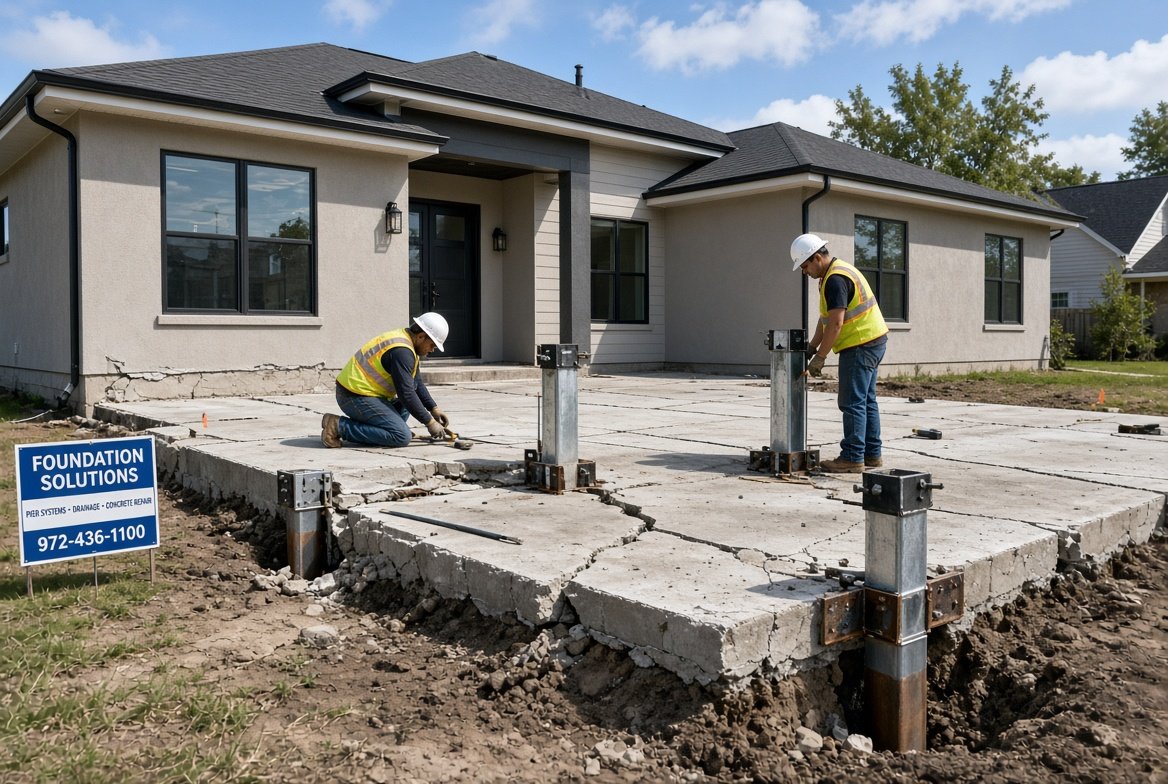
Hydraulic jacking is a primary method used to lift sunken concrete slabs and stem walls back to their original position. Contractors drive heavy-duty steel piers deep into stable soil layers beneath the house to create a permanent support structure.
Once the structure reaches its target elevation, the load shifts entirely onto the deep steel piers. This process permanently resolves severe floor sloping caused by shifting surface soils.
- Driving steel push piers deep into stable bedrock or dense load-bearing soil strata
- Placing heavy-duty hydraulic jacks beneath strategic lifting points along the foundation edge
- Monitoring lift elevation continuously with high-precision laser leveling equipment
- Securing the raised structure permanently with heavy steel brackets attached to footings
Polyurethane Foam Injection and Polyjacking
For interior concrete slab floors that have dipped due to soil erosion, high-density polyurethane foam offers a fast, non-invasive fix. Contractors drill tiny holes through the concrete and inject expanding foam to fill voids and lift the floor slab.
Polyjacking provides immediate results without requiring heavy excavation or major disruption inside the home. The high-density foam hardens quickly, creating a waterproof, lightweight base that prevents future sinking.
- Drilling small, dime-sized access holes directly through sunken concrete floor slabs
- Injecting two-part geotechnical polyurethane foam into voids beneath the concrete
- Allowing the expanding foam to lift the heavy concrete slab back to level in minutes
- Sealing access holes cleanly with matching concrete patch material for a smooth finish
Helical Pier Installation for Unstable Soil
When surface soils are weak or expansive, contractors often use helical piers to anchor sagging floors. These giant steel screws are twisted deep into the earth to establish solid bearing points for sunken footings.
Helical piers work exceptionally well in areas with shifting clay soils or high groundwater tables. Anchoring the home deep underground guarantees that interior floors remain level despite surface weather changes.
- Screwing helical steel shafts deep into stable soil strata using hydraulic torque motors
- Measuring installation torque to guarantee each pier meets strict load-bearing capacities
- Attaching heavy-duty steel brackets under the sinking sections of the concrete footing
- Raising the foundation frame carefully using synchronized hydraulic lifting manifolds
Crawl Space Support Post and Jack Adjustments
Homes built on pier-and-beam foundations often develop uneven floors due to rotting wooden posts or settling concrete pads. Leveling contractors replace decayed timbers and install adjustable steel jack posts inside the crawl space to lift sagging floor joists.
Reinforcing the crawl space framework eliminates bouncy, squeaky floorboards and levels sagging interior rooms. Proper crawl space support ensures weight distributes evenly across all primary load-bearing beams.
- Replacing soft, decayed wooden support posts and beams with treated structural lumber
- Installing heavy-duty adjustable steel screw jacks onto solid concrete pad footings
- Slowly turning jack screws to raise sagging floor joists back to precise horizontal alignment
- Sistering new floor joists alongside original warped timbers to add permanent structural rigidity
Subfloor Void Grouting and Mudjacking Techniques
When large voids develop under expansive concrete floor slabs, traditional mudjacking or slurry grouting fills the empty space to stabilize the floor. Contractors pump a dense mixture of sand, cement, and water beneath the slab to lift settled areas.
Filling subfloor voids restores full contact between the concrete slab and the earth below, preventing future cracking. Heavy slurry grouting creates a dense, solid base capable of supporting heavy interior loads.
- Mapping out subterranean void spaces beneath sunken concrete floors using soil probes
- Drilling strategic injection ports through the concrete slab across the settled area
- Pumping a high-pressure cementitious slurry mixture into empty spaces under the slab
- Raising low sections carefully while monitoring surface elevation with digital levels
Restoring Structural Balance and Floor Elevation
Partnering with professional foundation leveling contractors guarantees that uneven floors are restored using safe, engineered methods. Correcting settlement issues eliminates unsightly slopes, opens stuck doors, and protects your home’s total equity.
Taking action at the first sign of dipping floor surfaces prevents localized settlement from damaging surrounding structural elements. Restoring your home’s original elevation provides lasting safety, comfort, and peace of mind for years to come.